

01
Real infrastructure
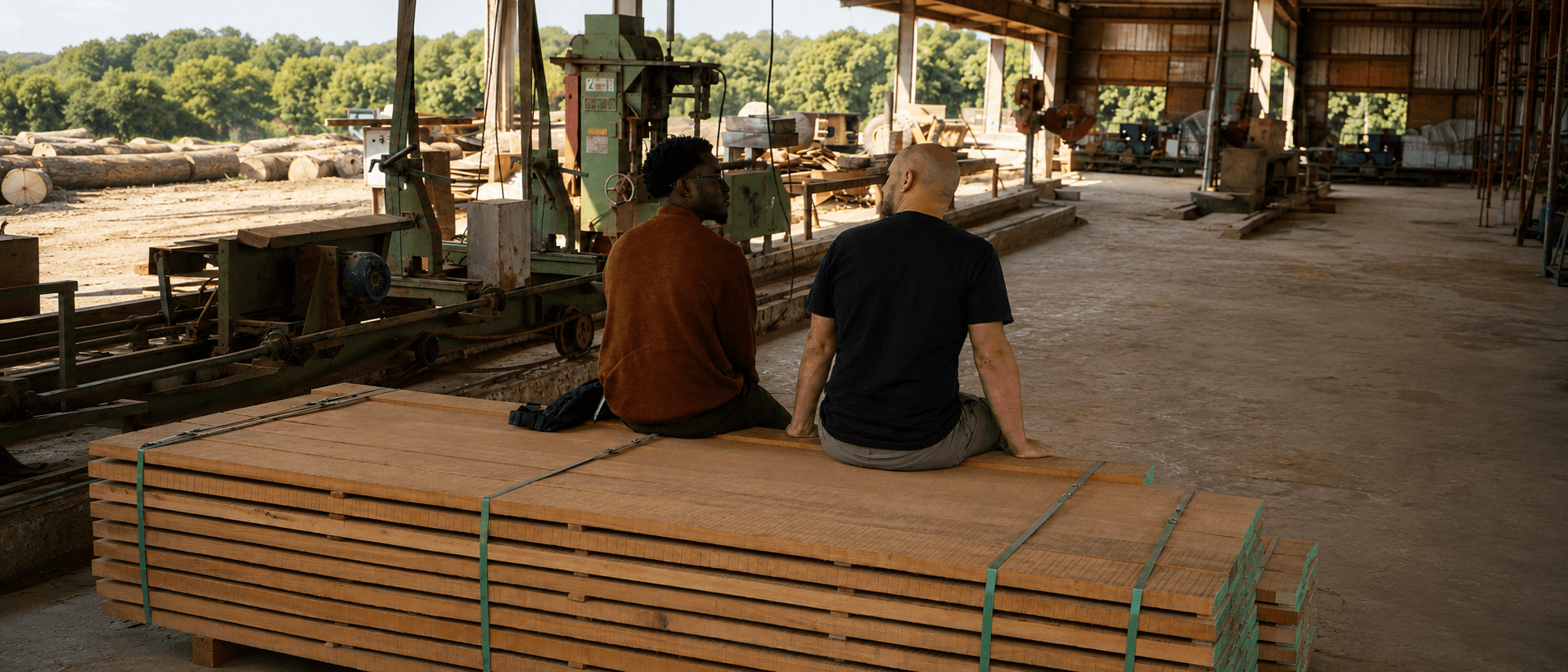
Projects built around feedstock, logistics, machinery and plant operations.
BUILDING SCALABLE CARBON REMOVAL INFRASTRUCTURE IN AFRICA
Raw Carbon is developing infrastructure that converts sustainably sourced forestry residues into durable biochar, recovered energy and long-term carbon storage.
ABOUT RAW CARBON
Raw Carbon is developing a repeatable carbon removal platform for Africa, beginning with its first planned hub in Richards Bay, South Africa.
The company brings together commercial development, forestry sourcing, logistics, engineering and local operating capability to build physical infrastructure around durable biochar carbon removal.
Richards Bay is the launch point. The wider ambition is an African carbon removal platform built one credible project at a time.
01
Projects built around feedstock, logistics, machinery and plant operations.
02
A repeatable model beginning in Richards Bay and intended for suitable forestry and industrial regions across Africa.
03
Connecting project development, carbon markets, biochar applications, energy recovery and strategic partnerships.
Our first planned hub
Project developmentRaw Carbon’s first planned hub is being developed in Richards Bay, within one of South Africa’s most important forestry, logistics and industrial regions. The location combines access to plantation residues, established transport infrastructure, potential energy users and export routes.
Selected for its combination of feedstock availability, logistics capability and industrial demand.
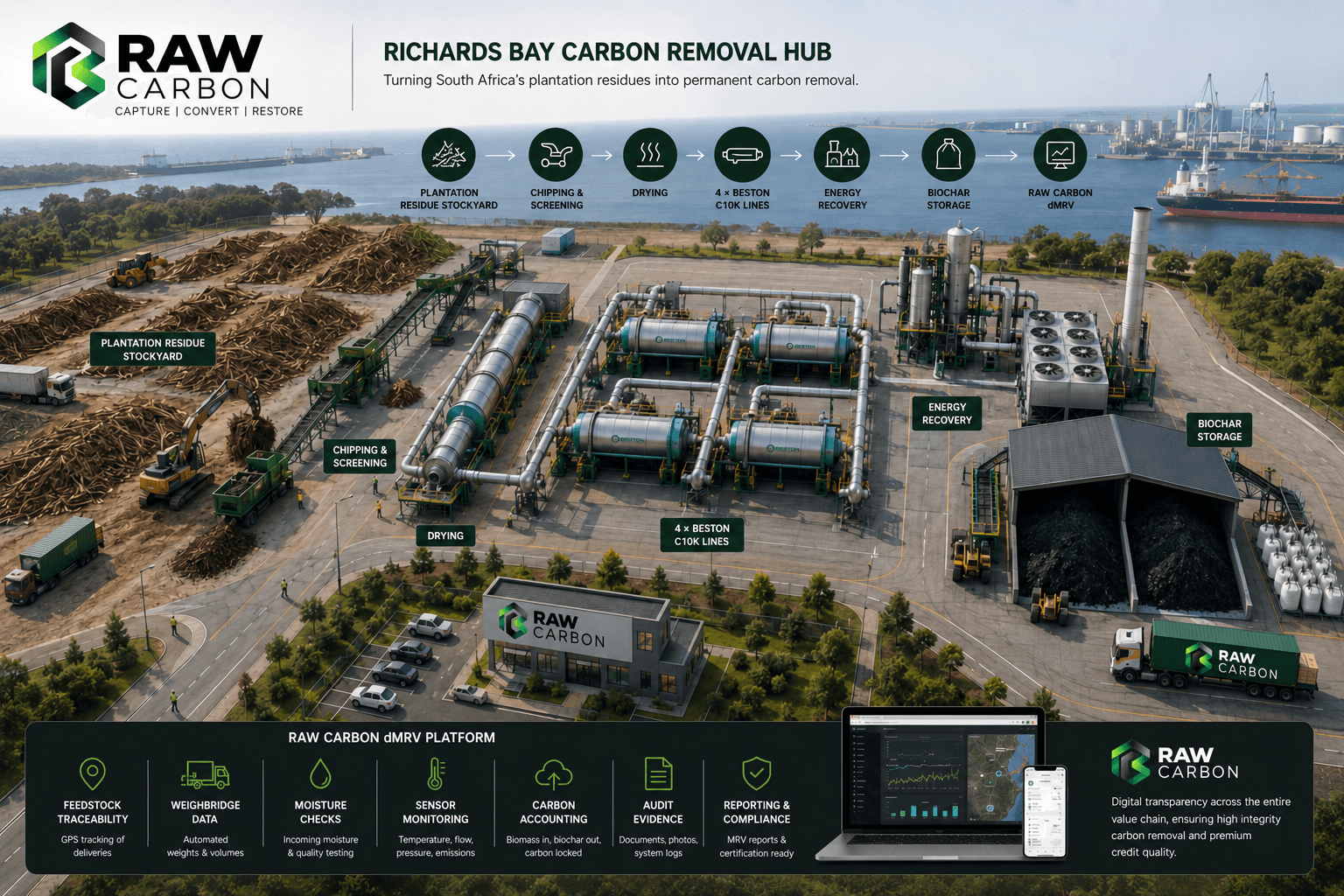
Scroll sideways to inspect the project visual.
01
Proximity to plantation forestry and suitable residue streams.
02
Established infrastructure for inbound feedstock and outbound products.
03
Potential users for recovered heat and electricity.
04
Access to logistics, engineering and industrial skills.
05
A model intended to support future projects in suitable African regions.
Capture. Convert. Restore.
01
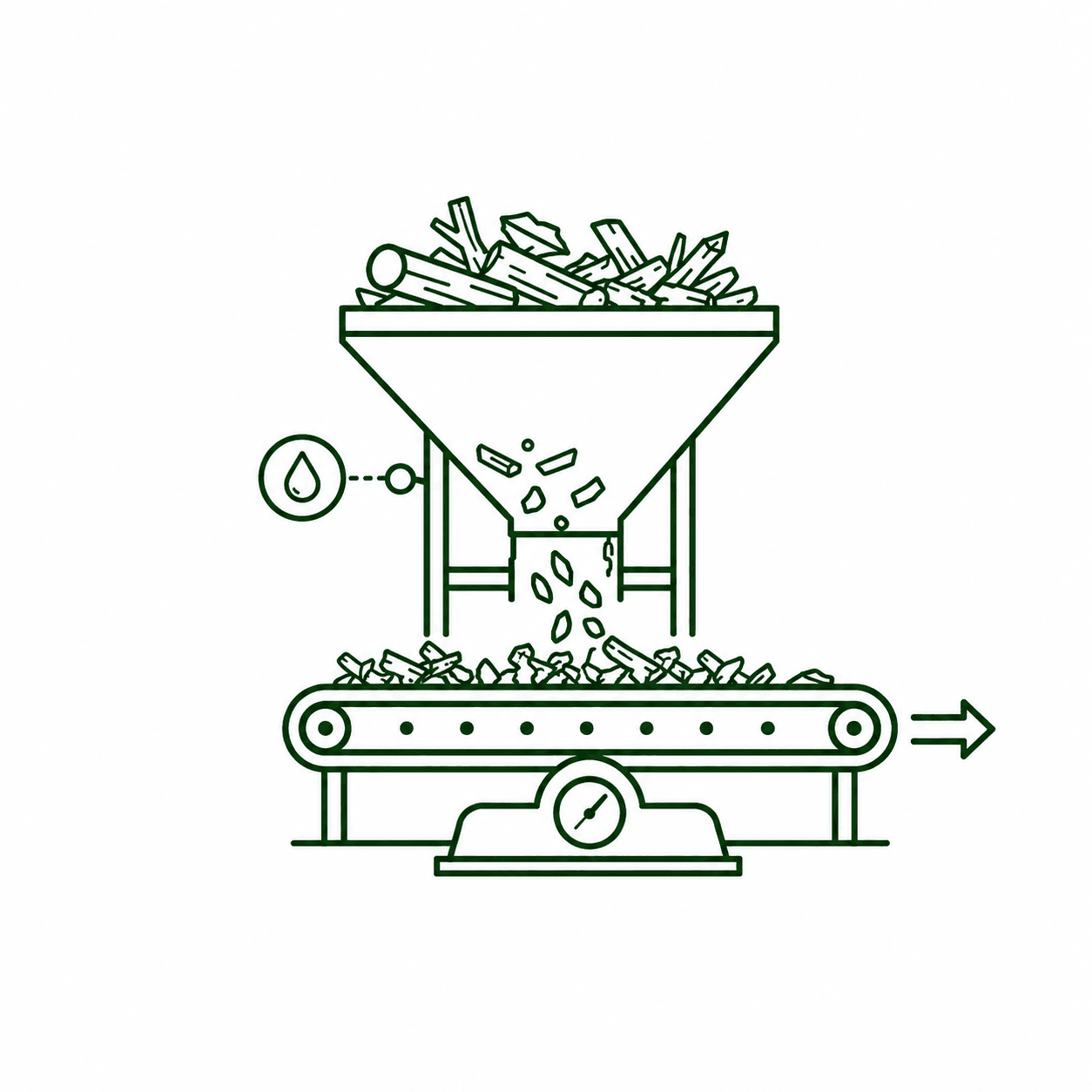
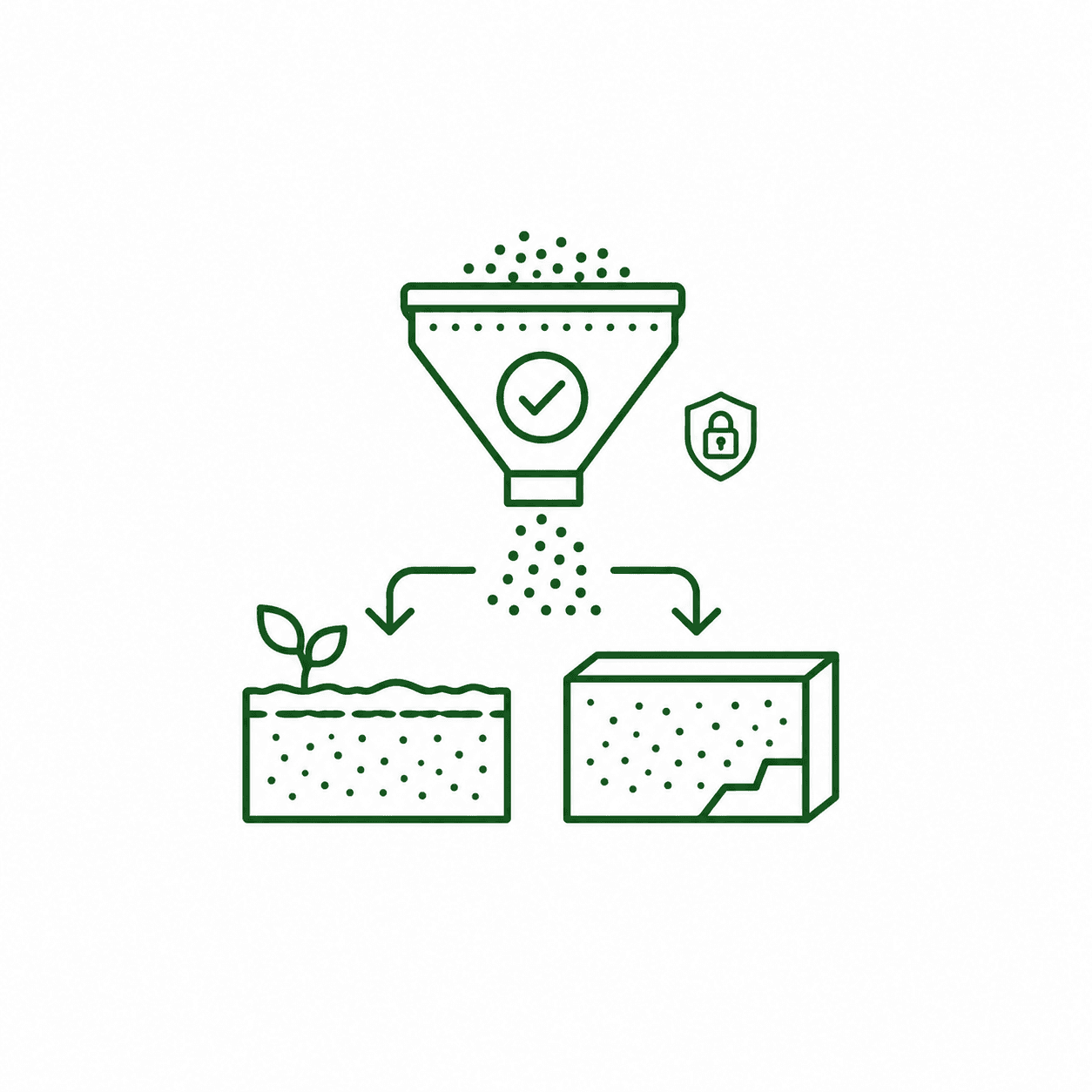
Eligible biomass streams are received, prepared and moved into the processing system.
02
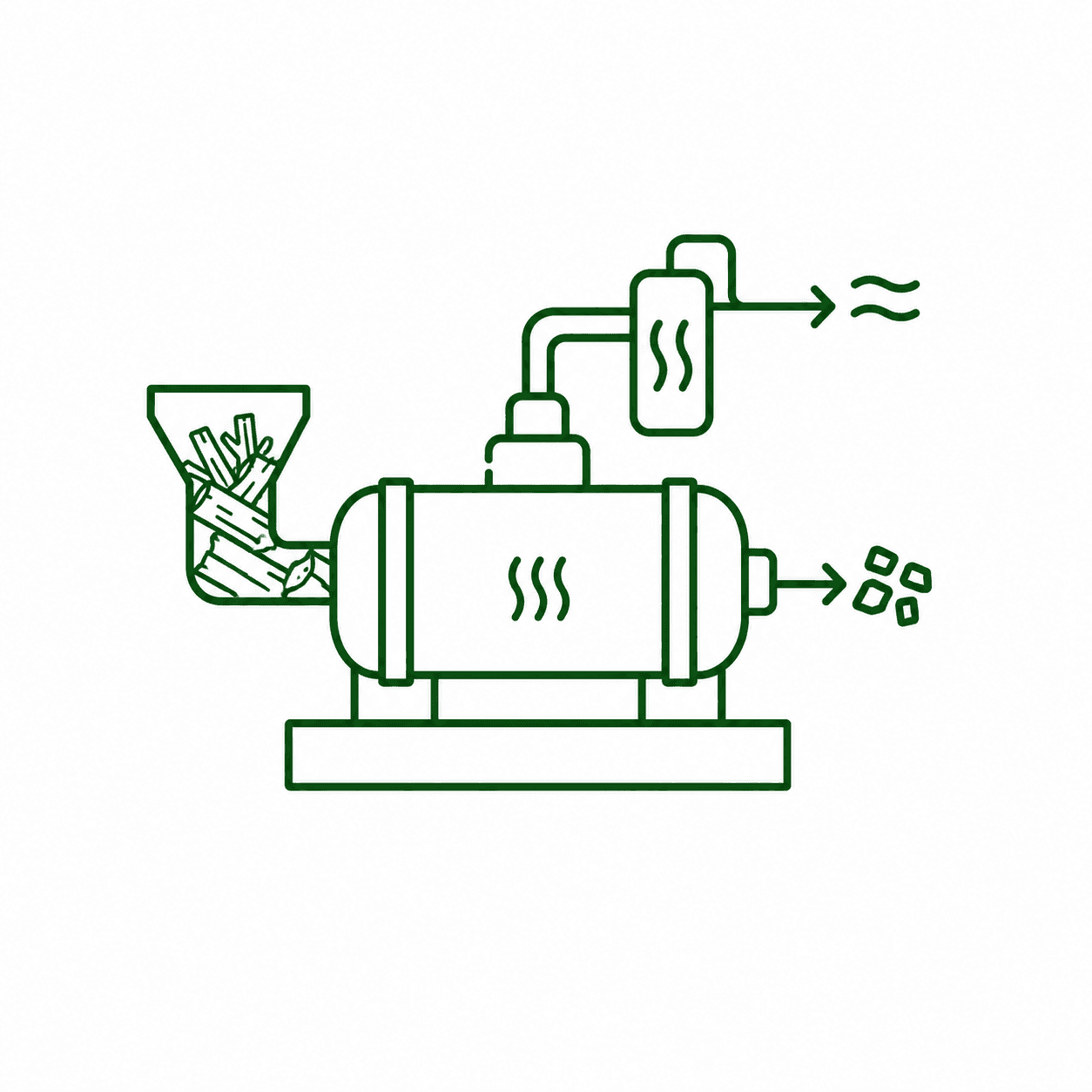
Prepared biomass is processed through controlled pyrolysis, converting part of its biogenic carbon into stable biochar.
03
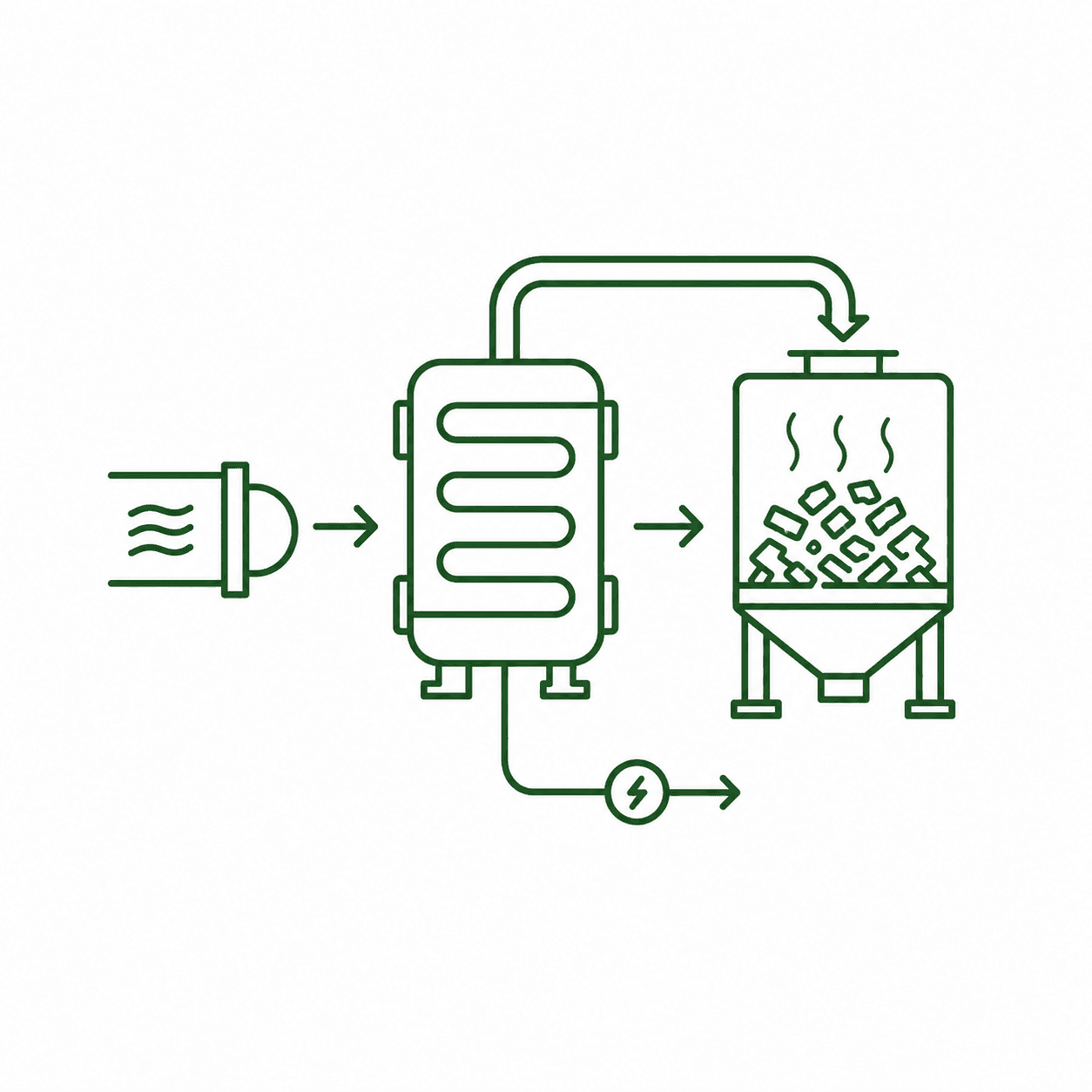
The process produces usable heat and combustible gas alongside biochar.
04
Biochar is directed toward durable long-term applications once product and site requirements are met.
Current engineering concept
The current four-line engineering concept provides an initial view of the planned hub’s feedstock, biochar, carbon removal and energy capacity.
171,500tonnes/year
35,308tonnes/year
~84,700tCO₂e/year
6.88MW
Indicative figures from the current engineering concept. Subject to final design, testing, financing, certification and commissioning.
The South African opportunity
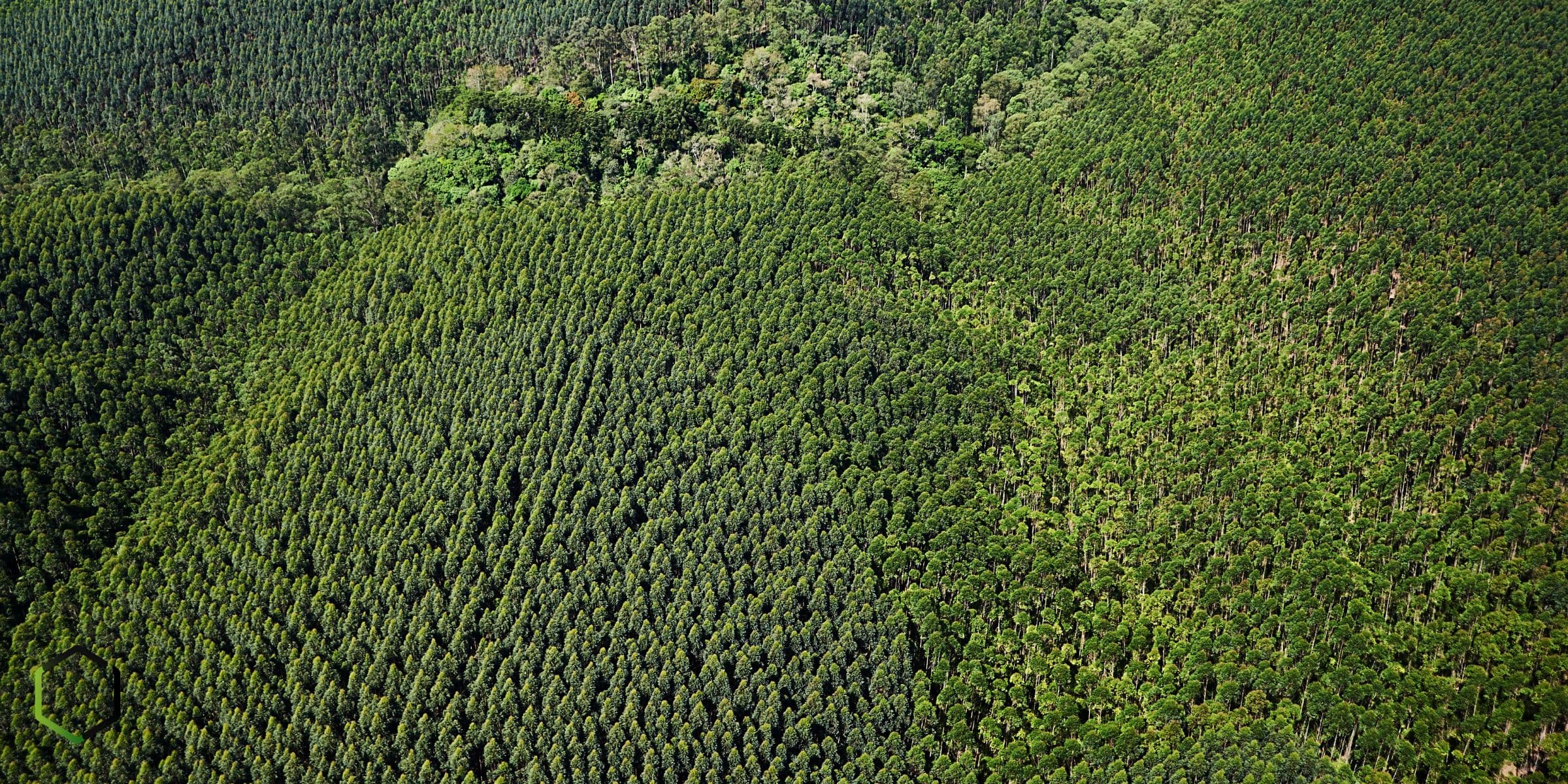
South Africa has an established plantation forestry sector, significant residue streams and industrial infrastructure capable of supporting biochar production.
Richards Bay is at the centre of local road and rail networks and its port connects South Africa with many international markets. It is also a major industrial zone in its own right and is the ideal location for Raw Carbon to develop its first hub.
Raw Carbon will initially prioritise eligible FSC and PEFC certified plantation feedstock, while helping develop credible future pathways for suitable, legally harvested non-certified residues over time.
01
Plantation harvesting and processing create bark, thinnings, chips and other suitable wood-based residues.
02
Certified plantation feedstock is the initial priority, supported by supplier due diligence and chain-of-custody evidence.
03
Buyers are seeking durable carbon removal with credible evidence, monitoring and clear eligibility boundaries.
04
Biochar and recovered energy may serve applications in materials, agriculture and local industry, subject to testing and offtake development.
Traceability and dMRV
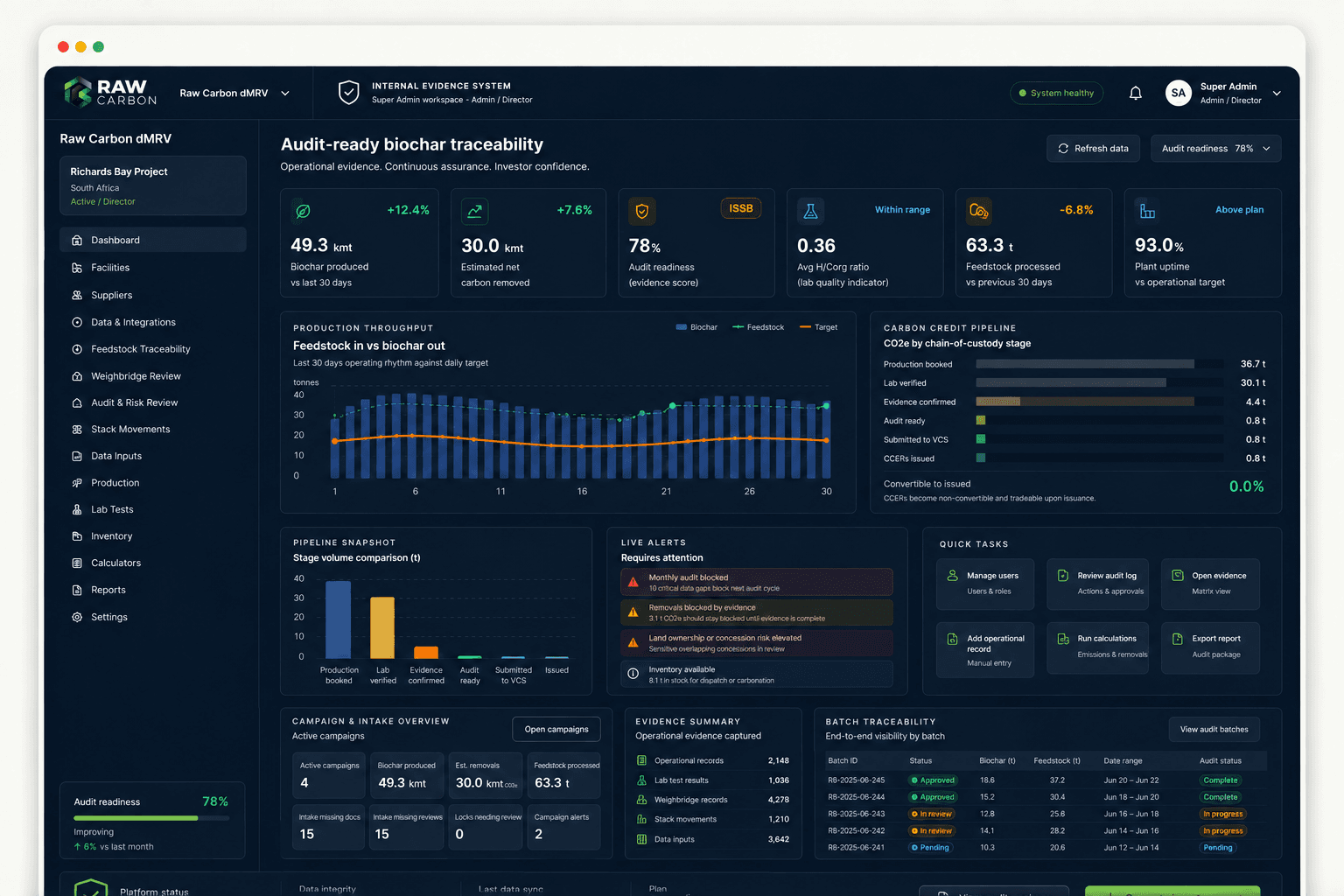
Raw Carbon OS is being developed as the operational evidence layer for the Richards Bay hub. It is designed to connect supplier due diligence, feedstock campaigns, deliveries, weighbridge records, processing, biochar lots, laboratory testing, dispatch, final use and carbon removal documentation in one traceable system.
The objective is simple: connect every physical movement to the records needed for operations, quality assurance, certification and audit.
Traceable operating chain
01
02
03
04
05
06
07
08
Controlled review states
Records must pass through controlled review before they can support a carbon removal claim.
Raw Carbon OS is being developed alongside the physical project to support operations, certification and audit from the first supplier campaign through to final-use evidence and carbon removal review.
Energy recovery
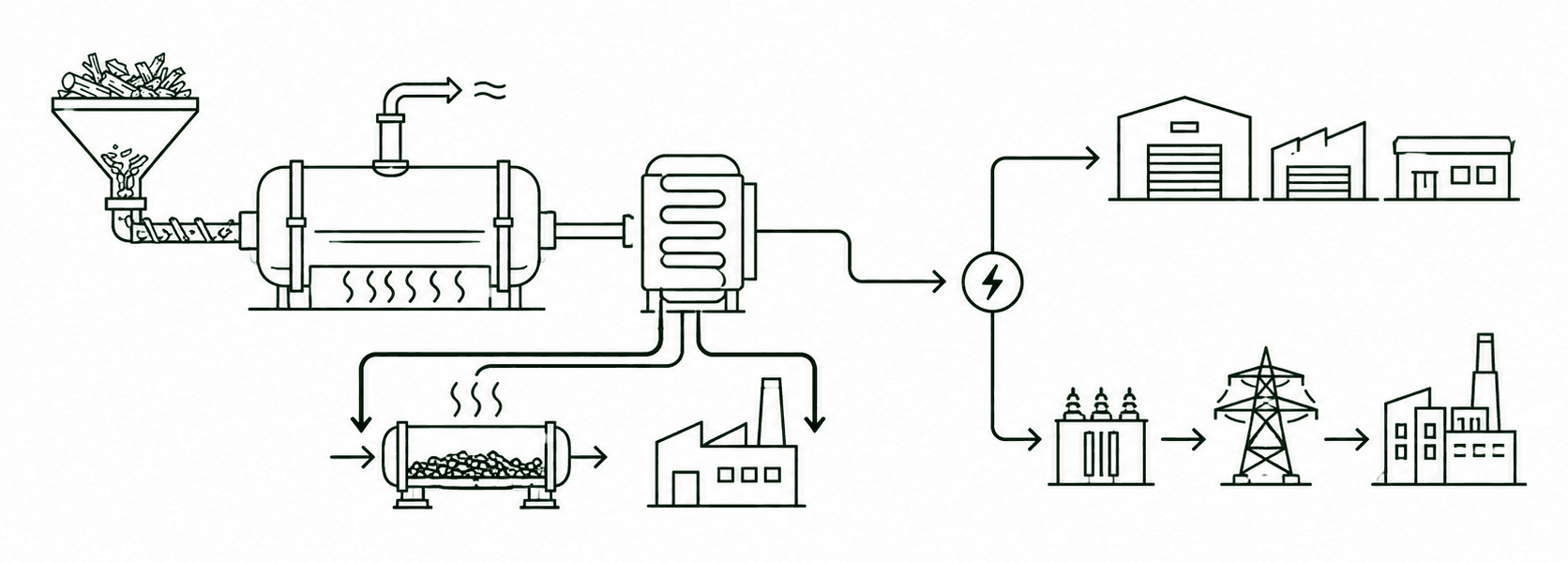
Pyrolysis produces heat and combustible process gas alongside biochar. Raw Carbon's current design is intended to recover this energy first for feedstock drying and plant operations, with potential for surplus electricity to be wheeled to nearby businesses or supplied through a main-line connection to Richards Bay industrial users.
01
Recovered heat is intended to reduce feedstock moisture before processing.
02
Recovered energy can support heat and power requirements within the facility.
03
Surplus electricity may be wheeled to nearby businesses or supplied through a main-line connection to Richards Bay industrial users, subject to final design and commercial agreements.
Local value and African impact
Raw Carbon wants its projects to create value beyond carbon removal. Alongside durable carbon storage, our ambition is to support local employment, skills, enterprise, useful energy and responsible access to biochar.
As the Richards Bay project develops, Raw Carbon intends to establish a dedicated community-benefit or charitable arm focused on practical initiatives that can strengthen local economic participation and resilience.
01
Support selected agricultural, environmental and community projects with suitable biochar where testing confirms it is appropriate for the intended use.
02
Explore ways for available project energy to support qualifying local enterprises, community facilities and social initiatives, subject to project economics and regulatory requirements.
03
Support local recruitment, technical training, apprenticeships and pathways into plant operations, logistics, maintenance, laboratory work and digital traceability.
04
Create opportunities for smaller businesses to participate in transport, maintenance, site services, feedstock preparation and other parts of the project value chain.
Our ambition is to build a community-benefit model that can grow alongside Raw Carbon projects across Africa.
Raw Carbon's projects are being built around real forestry regions, local businesses and the people who work within them. We want the value created by carbon removal infrastructure to extend beyond the plant itself — through jobs, skills, local enterprise, useful energy and access to appropriate biochar.
Every location will have different needs. Our intention is to work with local organisations, businesses and community partners to identify practical programmes that create measurable local value.
These initiatives are planned ambitions. Their scale and delivery will depend on project financing, operating performance, local partnerships, product suitability and applicable regulation.
ESG FRAMEWORK
Raw Carbon's ESG framework is intended to translate environmental, social and governance objectives into measurable project controls, operating data and transparent reporting.
WORK WITH RAW CARBON
01
02
03
04
05